
1922 Silver Dollar: Melt Value vs Collector Value Explained
The 1922 silver dollar, known as the "Peace Dollar," represents an object possessing two types of market 1922 silver dollar value.
The first type is determined by the pure silver content in the alloy, the second depending on the physical preservation and rarity of a specific specimen.
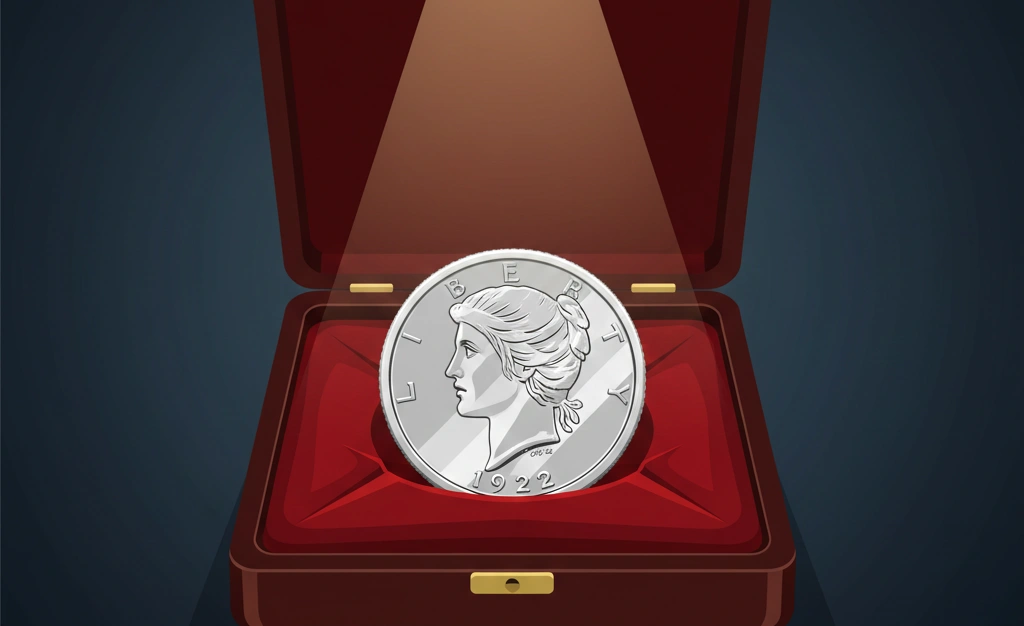
The coin was struck according to established weight and purity standards adopted for American currency of that period.
The alloy base consists of .900 fine silver, supplemented by copper to ensure necessary hardness.
Characteristic | Parameter |
Total Coin Weight | 26.73 grams |
Pure Silver Content | 24.05 grams |
Diameter | 38.1 mm |
Mints | Philadelphia (no mark), Denver (D), San Francisco (S) |
Total Mintage (All Mints) | 84,275,000 specimens |
Calculation of Melt Value
The value of the coin as precious metal is calculated by multiplying the pure silver content by the current market spot price per ounce.
With a silver price of $24 per ounce, the intrinsic value of the coin amounts to approximately $18.56 USD.
This figure represents the lower price floor, below which the coin's value does not fall even with significant damage present.
Fluctuations in silver market prices directly affect the value of low-quality coins (grades from G to VF).
Mintage Statistics by Mint Facility
The year 1922 became a record year for silver dollar production volume in U.S. history, determining their high availability in the modern market.
Mint Facility | Mint Mark | Mintage |
Philadelphia | None | 51,737,000 |
Denver | D | 15,063,000 |
San Francisco | S | 17,475,000 |
Mass production in Philadelphia results in most specimens lacking a mint mark in average condition trading with a minimal premium over the silver value.
Collector Value and the Sheldon Scale
The transition of a coin from the "melt" category to the "numismatic object" category occurs upon reaching certain preservation levels.
The value of specimens in MS (Mint State) condition demonstrates exponential growth when increasing the grade.
Condition | Preservation Description | Average Price |
VG-VF | Visible wear, rubbed relief details | $25 – $35 |
MS 63 | Presence of luster, small scratches | $50 – $70 |
MS 65 | Bright luster, absence of major defects | $150 – $250 |
MS 66 | Minimal striking marks, high quality | $500 – $900 |
MS 67 | Almost perfect condition | $15,000+ |
Price Dynamics Depending on Grade
Market data analysis shows that annual price changes differ significantly for common and rare specimens.
The value of coins in MS 63 grade over the last 10 years fluctuated within 5–10% depending on the silver rate.
Specimens in MS 66 condition and higher show an average annual numismatic premium growth of 3.5–5%, not correlating with the metal price.
A price drop of 15–20% in the MS 65 segment can occur when mass-releasing new certified batches from old bank vaults onto auctions.
Auction Records for the 1922 Silver Dollar
Record sums are recorded for coins possessing unique striking characteristics or an exceptional grade.
In 2014, at a Stack’s Bowers auction, a 1922 specimen in MS 67+ condition was sold for $25,850 USD.
A special place is held by rare High Relief varieties struck at the beginning of the year in limited quantities.
A 1922 High Relief specimen in MS 67 condition was realized at a price exceeding $100,000 USD, representing an exception to the general mass of low relief strikes.
Impact of the Mint Mark on Numismatic Premium
Despite the high overall mintage, coins from Denver (D) and San Francisco (S) in high grades are valued more than Philadelphia strikes.
This is linked to technological features of minting at branch mints, often leading to rapid die wear.
A 1922-S specimen in MS 66 condition is encountered 10 times less frequently than a Philadelphia specimen of similar quality.
The price difference between MS 65 for Philadelphia (about $130) and San Francisco (about $250) exceeds 90%.
Technical Defects and Mint Errors
The market value of coins with manufacturing defects is evaluated separately from standard catalogs.
Die Cracks: Numerous small cracks are characteristic of 1922, possessing no high value.
Off-center Strike: An image displacement of more than 10% increases the coin's value by $200–$500 USD.
Lamination Errors: Metal surface defects reducing the grade but representing interest as technological flaws.
Methods for Identifying Valuable Specimens
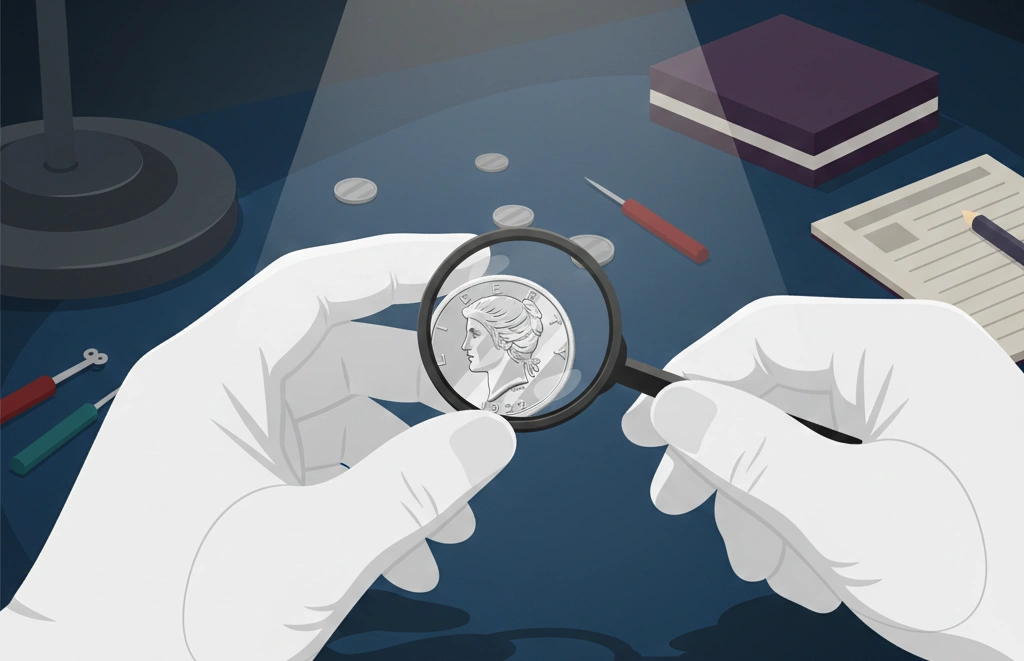
Initial inspection requires using a free coin identifier app.
Primary attention is paid to the coin fields and Liberty's hair on the obverse, being most susceptible to wear and contact marks.
The absence of circulation marks on the hair above the ear and the eagle's feathers on the reverse is a sign of Uncirculated condition.
Determining weight authenticity (26.73 g) allows for excluding modern counterfeits made from base metals with silver plating.
The Role of Independent Certification
Realizing a coin at a price significantly exceeding the metal value requires the presence of a plastic slab from one of the leading companies.
The price difference between an uncertified coin in MS 65 condition and a certified one can reach 50% due to subjective evaluation risks.
Dealers use population report data (Census/Population Reports) to evaluate the rarity of a specific grade, but for the initial check, the coin value app is perfect.
An increase in the number of coins in reports by 1% can lead to price stagnation in the short term.
Conclusion
The 1922 silver dollar is the most mass-produced representative of its series, maintaining a strong link to the silver value in the low-quality coin segment.
Investment potential is concentrated exclusively in specimens with a grade of MS 66 and higher, as well as in rare High Relief variants.
Calculating the real value requires a strict separation of the current market spot metal price from actual auction indicators for certified grades.